AI Agents for Small Businesses: Complete UK Guide (2026)
Posted On: May 11, 2026
Last updated: August 2026
AI agents are becoming practical tools for small businesses that want to automate repetitive work without hiring additional staff. Unlike traditional automation, these systems can complete multi-step workflows, interact with business software and make limited decisions within defined rules. This guide explains where AI agents add value, which tasks are suitable for automation, the risks to consider and how to introduce them successfully.
Quick answer: An AI agent is software that can complete multi-step business tasks with limited human input. Small businesses commonly use AI agents for customer enquiries, appointment booking, reporting, lead management and administrative work, while keeping people responsible for higher-risk decisions.
What Is an AI Agent?
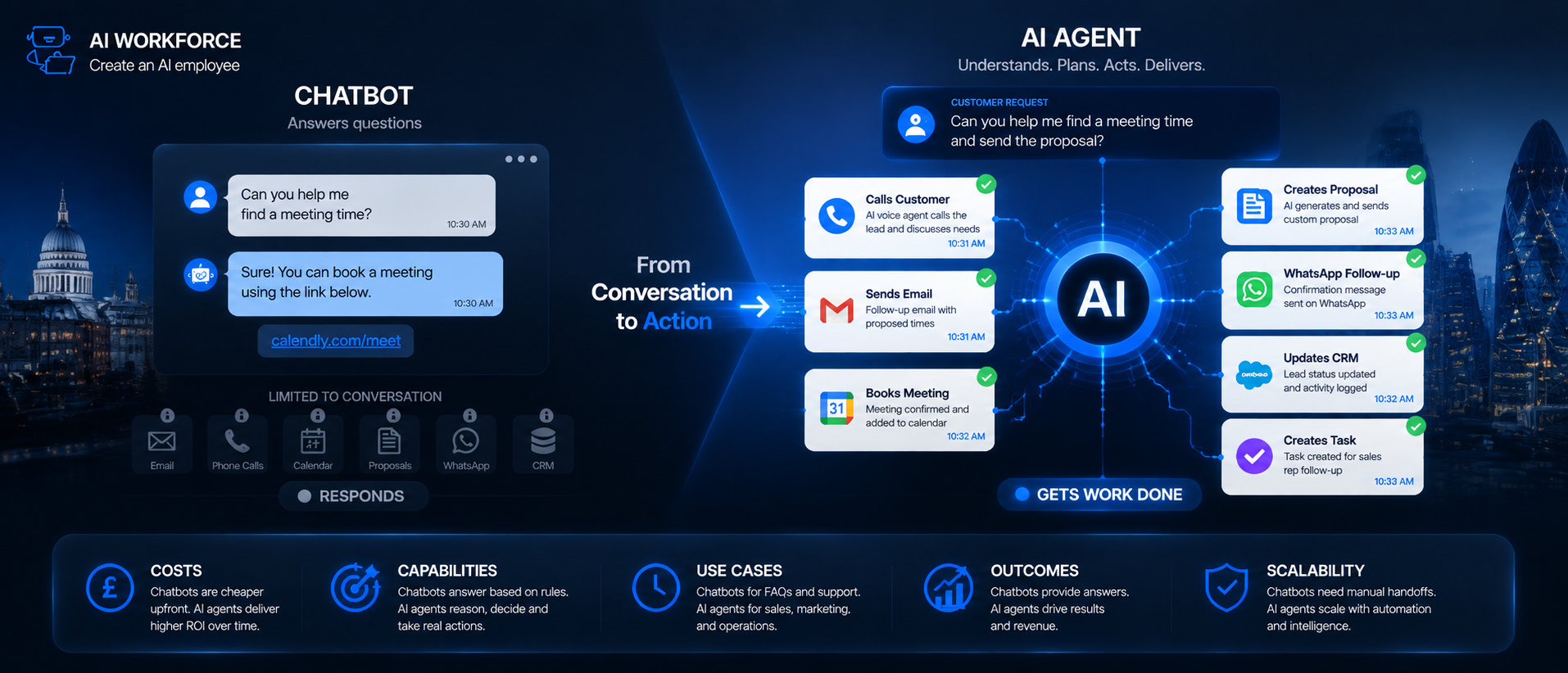
An AI agent is software that can complete a sequence of tasks with limited human input. Unlike traditional automation, which follows predefined rules, an AI agent can use available information, choose the next step within defined boundaries and interact with other business systems to complete a workflow.
Automation follows a fixed path: if X happens, do Y, every time, with no ability to adapt when something doesn't match the script. An AI agent works differently. Give it a goal, such as "respond to shipping enquiries and log the conversation," and it can read the message, decide how to respond, check order data if needed, and record the interaction, without a person handling each step.
Rules-based automation: best for predictable, fixed processes
AI chatbot: best for answering questions and drafting text, one prompt at a time
AI agent: best for variable, multi-step workflows that touch more than one system
AI copilot: best for assisting an employee who remains in control of the task
In Our Experience
In our experience, the fastest returns usually come from customer enquiries, appointment booking and administrative workflows. These processes are repetitive, easy to measure and generally require less complex oversight than customer-facing decision-making. Starting with one of these gives a small team real evidence before expanding further.
How Do AI Agents Work in a Small Business?
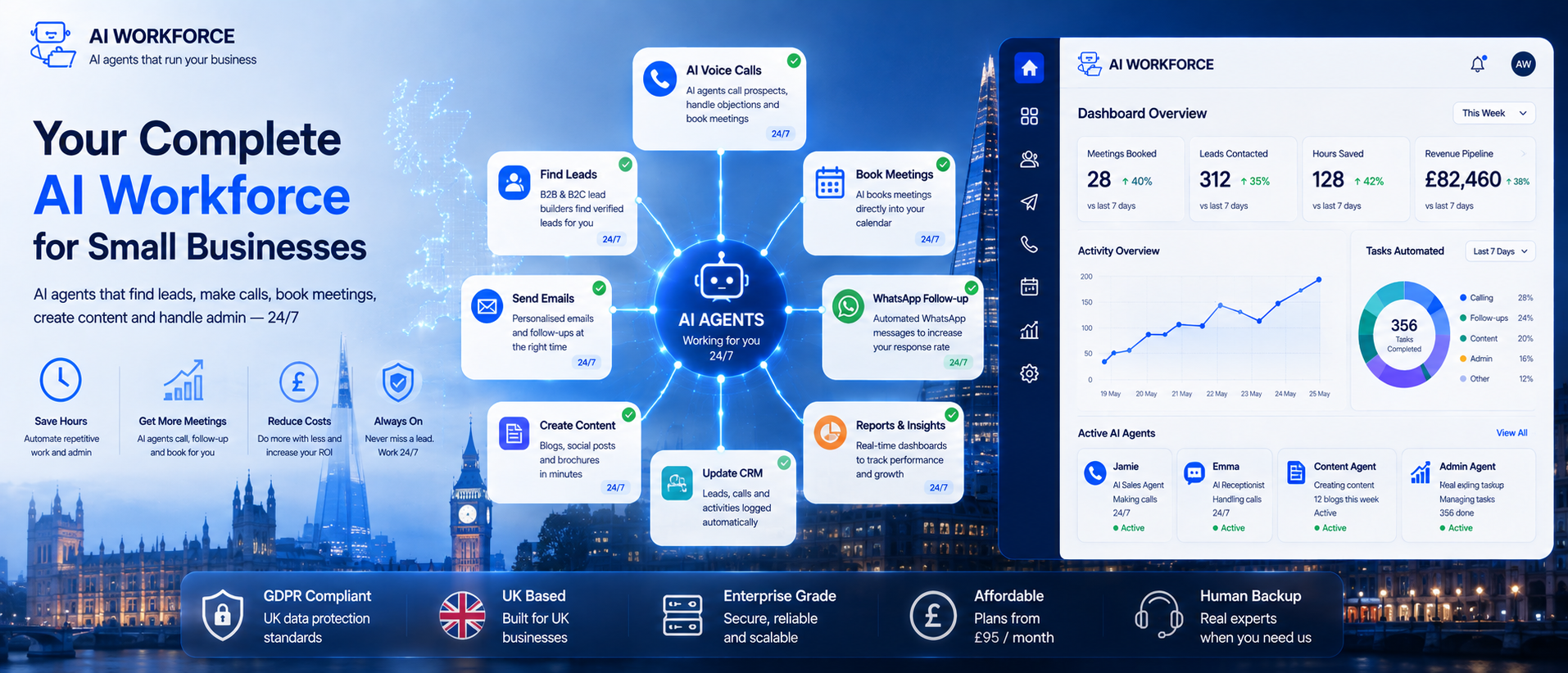
An AI agent operates within your existing workflow. If you use email, a calendar app and a CRM, an agent can connect to these tools through integrations and act across all of them. When a customer books a meeting, the agent can add it to your calendar and send a reminder. When someone submits a contact form, it can send a follow-up email and log their details, without anyone manually handling each step.
You typically set this up by giving the agent a defined instruction, such as "when someone asks about shipping, explain the policy and ask if they need anything else," and connecting it to the relevant data sources. The agent then handles matching requests as they come in, with a person reviewing its output, especially in the early stages.
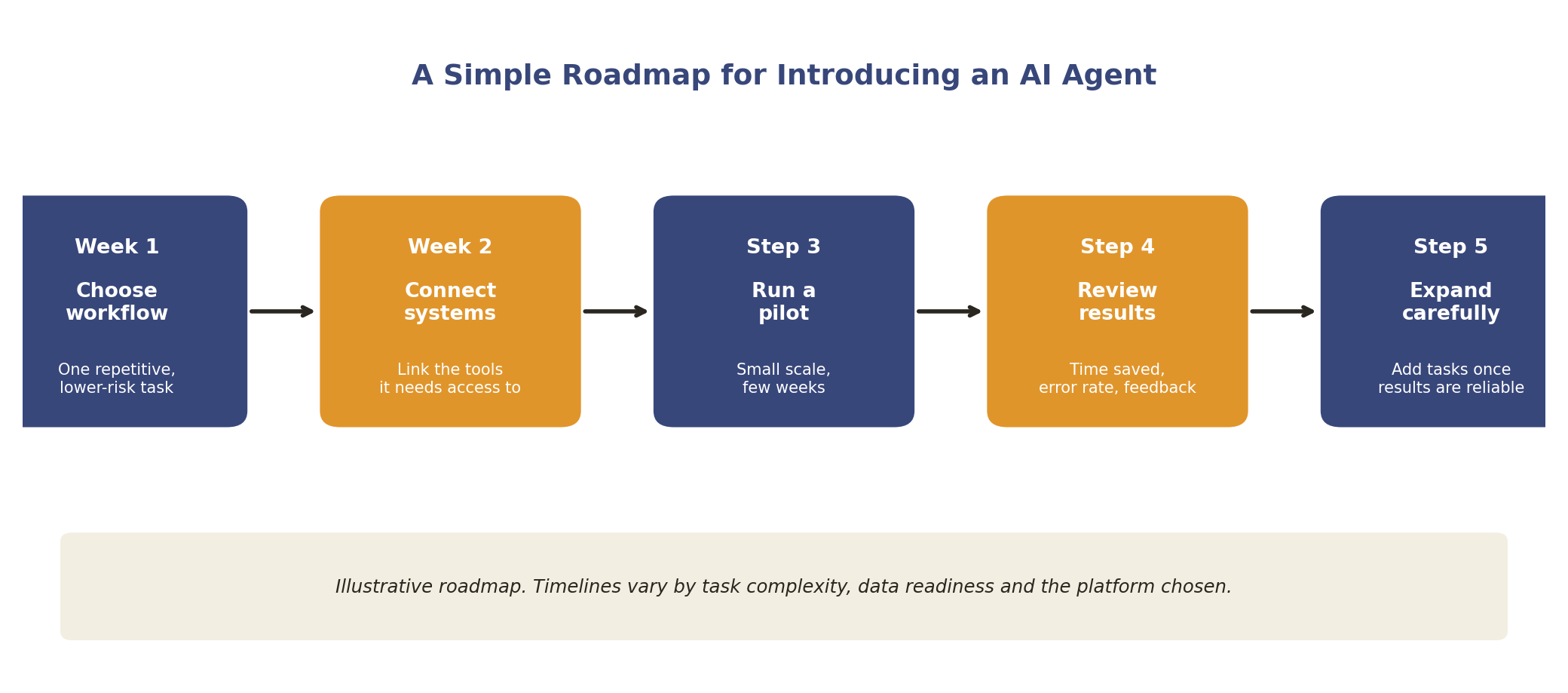
Illustrative roadmap for introducing an AI agent into a small business.
A practical rollout tends to follow five steps: choose one workflow to automate, connect the systems it needs access to, run a small-scale pilot, review the results (time saved, error rate, feedback), then expand carefully once you're confident in the output. Skipping the pilot and rolling an agent out business-wide on day one is the most common way this goes wrong.
Signs Your Business Is Ready for AI
A few practical signals suggest a task or team is ready for an AI agent: repetitive admin work that eats up hours each week, customer enquiries increasing faster than your team can comfortably handle, several disconnected systems that need manual updating in more than one place, manual data entry that duplicates information already held elsewhere, follow-ups that regularly get missed or delayed, and staff time going on routine work rather than higher-value tasks. If two or three of these sound familiar, that's usually a good place to start a pilot.
Use Cases by Business Area
Rather than treating "AI agent" as one generic tool, it helps to think about specific tasks by department.
Customer service: answering common enquiries, booking and rescheduling appointments, routing calls or messages to the right person.
For a closer look at this specific use case, see our guide to AI call centre agents.
Sales: lead qualification and scoring, keeping CRM records updated, sending timely follow-ups.
Marketing: drafting content and social posts, managing email sequences, pulling together performance reporting.
For a deeper look at this area, see our guide to the best AI marketing agencies for 2026.
Administration: processing routine invoices, scheduling and calendar management, data entry and record-keeping.
Operations: monitoring stock levels, drafting purchase orders, routine supplier communication.
In our experience, businesses achieve the fastest return when they start with one task in one of these areas rather than trying to automate an entire department at once.
It also helps to compare what a task looks like before and after an agent is introduced:
Scheduling: a calendar app that stores availability → an agent that books, confirms and follows up automatically
CRM: a system that stores contact records → an agent that updates records, scores leads and triggers follow-ups
Reporting: a dashboard you have to read and interpret → an agent that drafts a plain-language summary and flags anything unusual
Email: a platform that sends a campaign you've built → an agent that drafts content, sends it and adjusts based on engagement
AI Workforce insight: small businesses usually see faster adoption when staff understand that agents remove repetitive work rather than replace expertise. In practice, successful projects tend to begin with one measurable workflow before expanding into other departments.
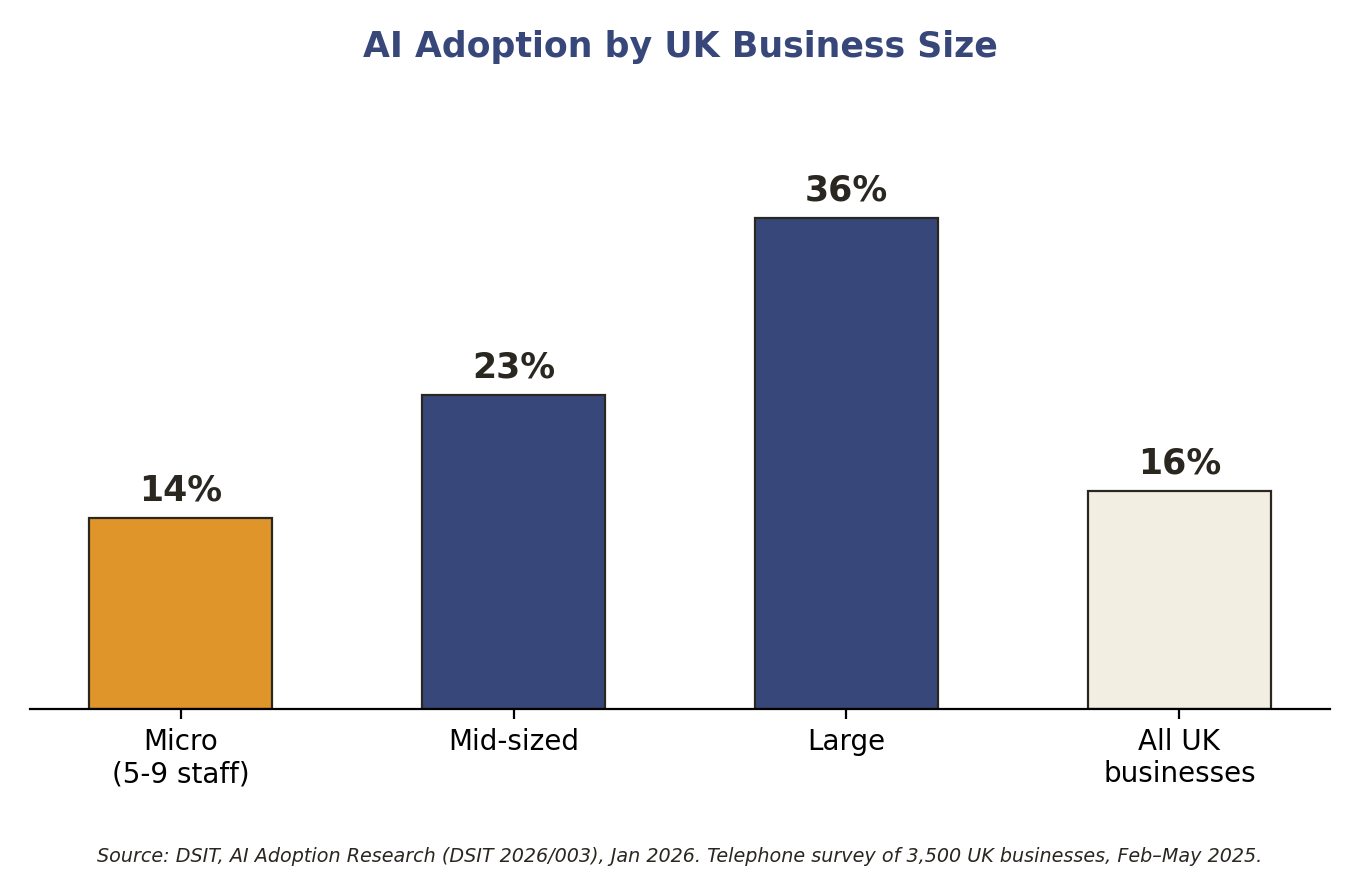
AI adoption rises with business size, though micro businesses lead on staff usage intensity (see below).
Source: DSIT, AI Adoption Research (DSIT 2026/003), published 28 January 2026. Telephone survey of 3,500 UK businesses, February–May 2025.
Lower-Risk and Higher-Risk Tasks
Not every task is equally safe to hand to an agent, and it's worth being deliberate about where to start.
Generally lower-risk: meeting notes and summaries, appointment scheduling, CRM updates, first-draft content, internal reporting
Higher-risk, needs closer oversight: pricing decisions, refund or discount approval, HR-related decisions, legal or compliance responses, financial advice, and anything sent to a customer without review
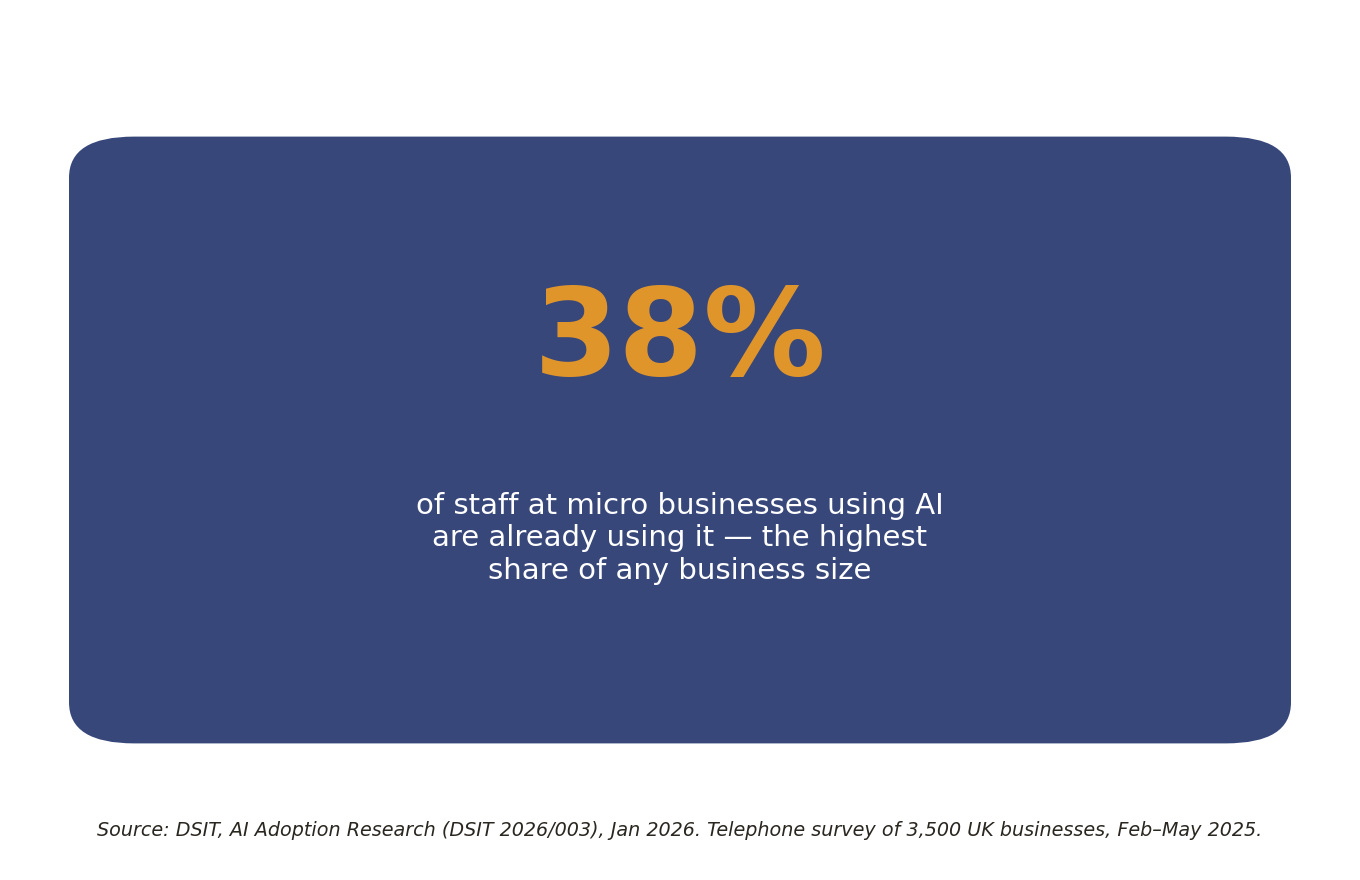
Among micro businesses already using AI, staff usage intensity is the highest of any business size.
Source: DSIT, AI Adoption Research (DSIT 2026/003), published 28 January 2026.
Governance and Controls
Before rolling out an AI agent, a small number of controls make a meaningful difference:
Access controls, so an agent only reaches the systems and data a task genuinely requires
A clear approval process for anything customer-facing or higher-risk
An audit log so actions taken by an agent can be reviewed after the fact
A named owner responsible for what the agent does
A regular review schedule to check output quality and catch drift
Spending limits, for any agent able to place orders or adjust budgets
An escalation path for when something goes wrong
Data Protection and Privacy
Any AI agent handling customer data needs to be considered against UK GDPR, and PECR if it's involved in email or SMS marketing. Before connecting an agent to customer records, it's worth checking: what the AI provider does with the data, whether it's used to train external models, how long it's retained, and where it's processed and stored. Data residency matters if a provider processes data outside the UK. Checking these points with your data protection lead before granting access is far easier than untangling a problem afterwards.
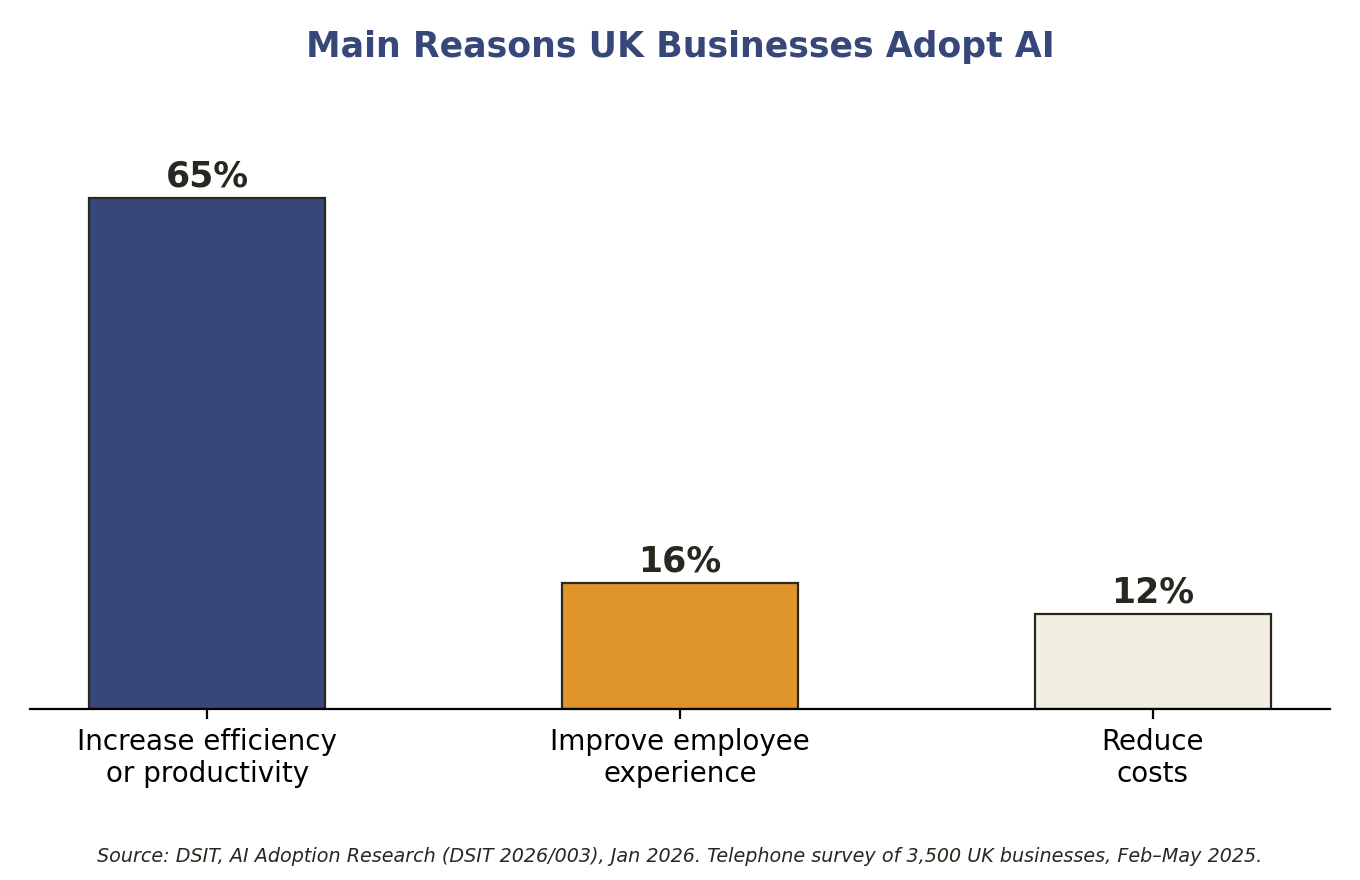
Efficiency and productivity are by far the most common reasons UK businesses adopt or scale AI.
Source: DSIT, AI Adoption Research (DSIT 2026/003), published 28 January 2026.
Getting Started With an AI Agent
Building an AI agent no longer requires coding or a technical team. Most platforms are built for small business owners: you describe the task, connect the relevant tools through built-in integrations, and test the result on a small scale before expanding it.
The practical steps are: pick one workflow, connect the systems it needs, run a limited pilot, review the results, then expand carefully once you're confident in the output. Trying to automate everything at once tends to create more problems than it solves; a narrow, well-tested starting point is far more reliable.
AI Workforce insight: businesses that try to automate everything on day one usually struggle. The teams that succeed tend to begin with one measurable workflow, prove its value, then expand gradually as confidence grows.
How Much Time Can AI Save?
Rather than quoting generic percentages, it's more useful to look at what changes for a specific task:
Appointment booking: manual back-and-forth → automated booking and confirmation
CRM updates: manual, often delayed → automated, updated in real time
Follow-ups: frequently forgotten or delayed → triggered automatically
Meeting summaries: written up after the fact, if at all → drafted automatically, reviewed by a person
Illustrative shifts in effort, not measured figures. Actual time saved depends on task complexity, data quality and how much review a team chooses to keep in place.
Platforms and Where to Start
The market spans large platforms adding agent features to tools you may already use, and smaller specialist tools built around a single workflow.
CRM-native platforms (such as HubSpot or Salesforce): best if you're already using the same CRM
General automation platforms (such as Zapier): best for connecting existing tools into a workflow
Configurable agent builders (such as Relevance AI): best for custom, multi-step workflows
General-purpose AI assistants (such as Microsoft Copilot, OpenAI's tools, Claude or Google Gemini): best for drafting, research and employee-assisted tasks
Conversational agent platforms (such as Voiceflow or Lindy): best for building customer-facing chat or voice agents
Pricing, features and support vary considerably between these, so it's worth checking directly with each vendor rather than assuming one size fits all.
What Does This Cost, and What's the Return?
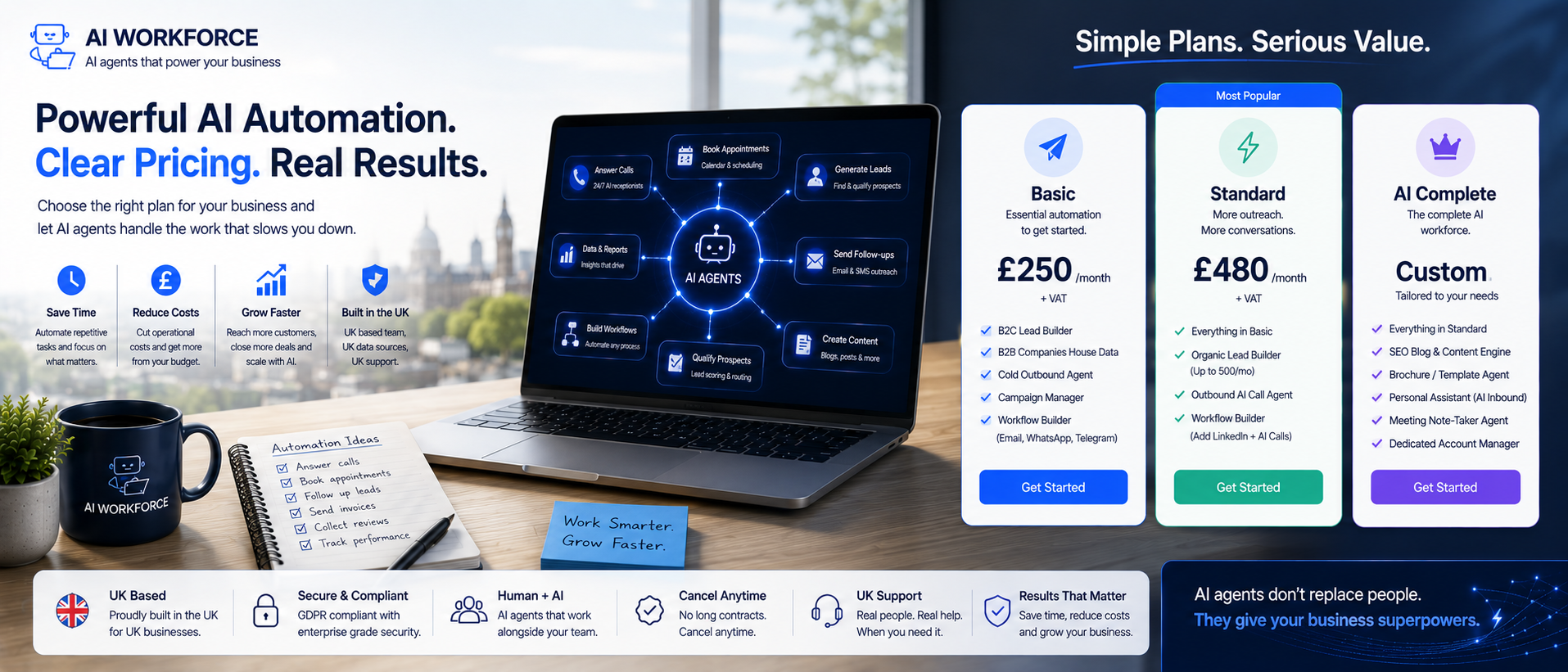
Many platforms offer a free tier or trial, which is a reasonable way to test whether an agent delivers real value before committing to a paid plan. Free tiers usually come with limits on volume or features. Beyond that, pricing varies by platform and usage, and it's worth checking directly with vendors rather than relying on generic figures.
The clearest return tends to come from time saved on a specific, measurable task: hours spent on manual scheduling, repetitive data entry, or answering the same handful of customer questions. Tracking time saved and error rate on a single pilot task gives a much more honest picture of value than a general sense that "AI is helping."
Where AI Agents Still Fall Short
Agents are not well suited to tasks requiring genuine judgement, nuanced customer relationships, or decisions with legal, financial or safety consequences. They can also struggle with messy or incomplete business data, producing confident but wrong output if the underlying records aren't reliable. Keeping a person responsible for higher-risk decisions, and reviewing agent output regularly, remains important regardless of how capable a platform claims to be.
Common mistakes to avoid: trying to automate every department at once, giving an agent unrestricted system access, relying on poor-quality CRM data, measuring activity instead of business outcomes, and not assigning a named owner for what the agent does.
Keeping the Human Touch
A common concern is that automating tasks will make a small business feel impersonal. In practice, the opposite is usually true when it's done well: agents handle the repetitive, low-stakes interactions, freeing up time for the conversations that actually need a person. Writing an agent's responses in your own brand voice, and always giving customers an easy route to a real person, keeps the balance right.
Customers generally care more about getting a fast, accurate answer than whether the first response comes from a person or an AI system. The important part is making it easy to reach a human whenever the situation requires judgement, empathy or an exception to the normal process.
Frequently Asked Questions
What is an AI agent for a small business?
An AI agent is software that can complete multi-step business tasks with limited human input. Small businesses commonly use AI agents for customer enquiries, appointment booking, reporting, lead management and administrative work, while keeping people responsible for higher-risk decisions.
Do I need technical skills to use an AI agent?
No. Most commercial platforms are built for non-technical users, though connecting an agent to more complex systems may still benefit from some setup support.
Is there a free way to try an AI agent?
Many platforms offer a free trial or tier with limited features or volume. This is a reasonable way to test value before paying for a full plan.
What tasks should I automate first?
Repetitive, lower-risk, easy-to-measure tasks such as answering common enquiries, scheduling, or reporting are safer and more revealing starting points than customer-facing or compliance-sensitive tasks.
Will an AI agent replace my staff?
Most current use cases support existing staff by handling repetitive work, rather than replacing roles outright, freeing people for judgement calls and relationship-building.
Is my customer data safe with an AI agent?
It depends on the provider. Check what happens to submitted data, whether it trains external models, how long it's retained, and where it's processed before connecting any agent to customer records.
How much does an AI agent cost?
Pricing varies by platform and usage, from free tiers to paid subscriptions. It's worth checking directly with vendors for current pricing.
Can an AI agent handle phone calls?
Some platforms offer voice-based agents that can answer calls, book appointments or triage enquiries, though quality and reliability vary between providers.
Key Takeaways
An AI agent can complete multi-step tasks with limited human input, unlike single-prompt chatbots or fixed automation
Start with one repetitive, lower-risk task, such as enquiries, scheduling or reporting, rather than automating everything at once
Keep people responsible for higher-risk decisions: pricing, refunds, HR, legal and financial advice
Governance (access controls, an audit trail and a named owner) matters as much as the technology
UK GDPR and PECR apply to any agent handling customer data or sending marketing messages
A narrow pilot, reviewed and expanded gradually, is more reliable than a business-wide rollout on day one
Ready to Introduce AI Agents Safely?
AI Workforce helps small businesses identify where AI agents can genuinely save time, connect them to existing systems, and introduce the right level of oversight from day one. We'll help you identify the workflows most suitable for AI, assess the risks and build a practical roadmap based on your business rather than a generic template.
About AI Workforce
AI Workforce helps UK organisations introduce AI safely through practical automation, AI agents and workflow design. We work with businesses to identify suitable use cases, improve productivity and implement AI with appropriate governance and human oversight.
Reviewed against current UK GDPR and PECR guidance: August 2026
Frequently Asked Questions
Everything you need to know about this topic
An AI agent for a small business can handle routine customer inquiries through a chatbot or AI assistant, freeing staff to focus on complex cases. These agents use automation tools to respond to FAQs, route requests, and provide instant answers, which helps save time and increases customer satisfaction. With custom AI agents, you can ensure responses are aligned with business tone, and relevance AI checks keep the information current and accurate.
A chatbot typically handles scripted interactions like FAQs or simple lead capture, while an AI assistant can take on broader tasks such as scheduling, data retrieval, and workflow automation. An AI agent, different from a basic chatbot, often uses natural language understanding and integrations so agents take on more complex responsibilities. For value for small teams, combining chatbots with custom AI agents provides both quick responses and deeper task management.
Businesses can use AI agents to manage invoicing, appointment scheduling, inventory alerts, and employee onboarding by integrating automation tools with existing systems. Agents handle repetitive processes, and you can train custom AI agents to follow your policies so they're aligned with business goals. This helps teams save time and reduces human error while improving operational efficiency.
Yes, many platforms offer low-code or no-code options to build custom AI agents, allowing small business owners to configure workflows, conversational scripts, and API integrations without advanced programming. These tools often include templates for common business needs, letting you discover how small teams can implement AI agents to manage daily tasks and scale gradually with minimal IT overhead.
Security depends on the platform and vendor practices. Choose providers with strong data encryption, access controls, and compliance certifications relevant to your industry. You can also set policies so agents directly anonymise or store limited data and ensure any AI content produced meets privacy standards. Establishing governance ensures AI agents take data-handling actions that are aligned with business compliance requirements.
Small businesses typically see ROI through time savings, reduced labour costs, faster response times, and increased lead conversion. By tracking metrics such as time saved per task, reduction in support tickets, and revenue uplift from faster follow-ups, you can quantify value for small operations. Using relevance AI and analytics built into many platforms helps you optimise agents and demonstrate a clear business impact.
Regularly review agent performance against key performance indicators and update training data so agents stay aligned with business priorities. Incorporate feedback loops where staff can correct or refine responses, and use controls to limit actions agents can perform. Combining human oversight with automation tools helps ensure custom AI agents stay relevant and deliver consistent value for small teams.
Tasks best suited for AI agents include customer support chatbots, lead qualification, appointment booking, order tracking, basic bookkeeping assistance, and content drafting using AI content tools. These functions allow agents to handle high-volume, repetitive jobs while humans focus on strategic work. Discover how small businesses can use ai agents to manage routine operations and scale customer interactions without proportionally increasing headcount.