Best Social Media Automation Tools Powered by AI
Posted On: July 29, 2026
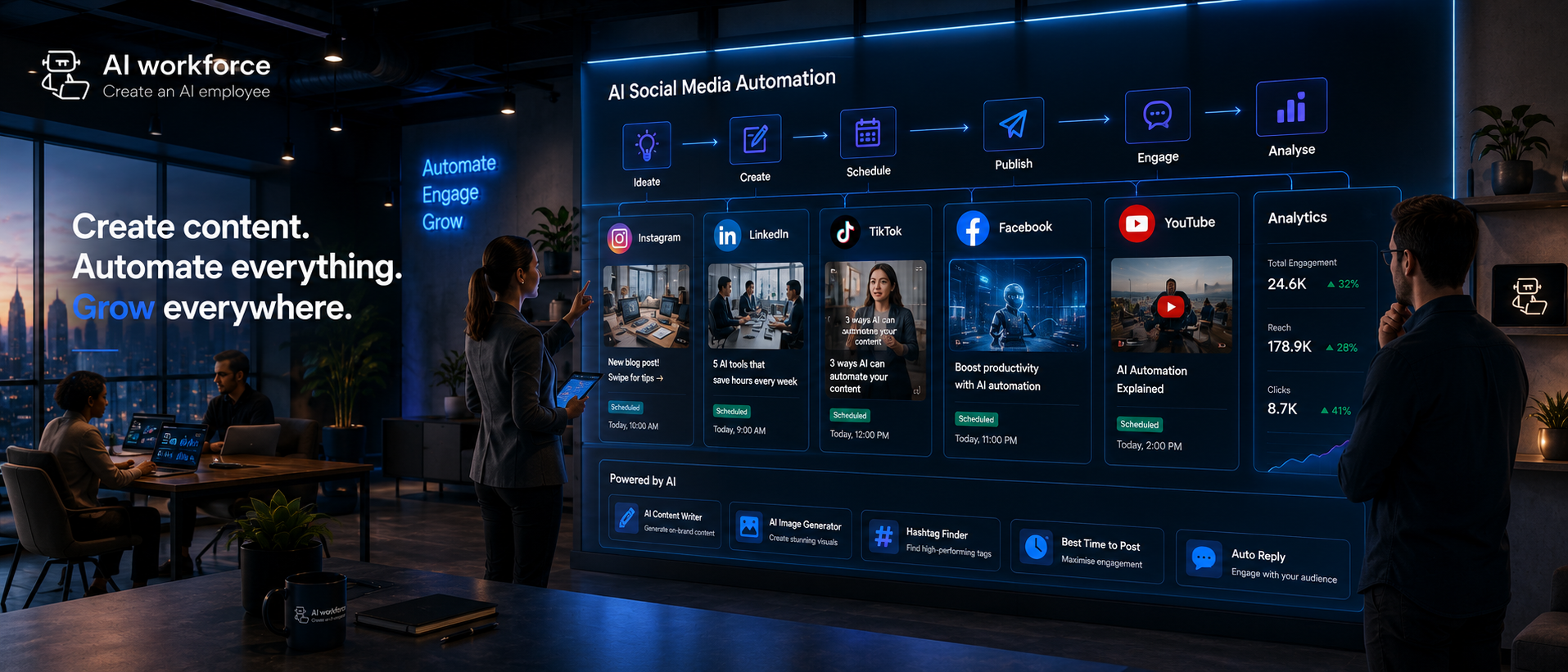
Running social accounts across five platforms used to mean five separate logins and a constant scramble to post on time. Social media automation, backed by AI, now handles the repetitive half of that job so a person can focus on the posts that actually need a human voice. This guide covers what to automate, what to keep hands-on, and which tools are worth paying for.
What Is Social Media Automation and How Does AI Fit In?
Social media automation means using software to handle repeatable tasks, posting, basic replies, and reporting, without a person clicking through each platform one at a time. Automate the predictable parts first, like publishing at a set time, and a team gets real hours back for strategy and creative work.
AI fits in as the layer that makes this smarter than a fixed schedule: instead of just posting at a pre-set time, AI-powered social media increasingly suggests the best time to post automatically based on when an audience is actually active. AI automation turns a rigid calendar into something that adjusts on its own.
Use AI to draft captions, resize images for different social media platforms, and flag a post that might need a second look before it goes out, all without slowing down the actual publishing schedule.
What Are the Benefits of Automating Your Social Media?
Automating your social media and saving time is the most obvious win, though far from the only one: a task that used to take an hour across five platforms can shrink to a few minutes of review, and a small team can maintain a presence that used to require several more people.
Consistency improves too, since posts go out on schedule even on a busy week, and a social media strategy actually gets followed instead of slipping when things get hectic. That consistency alone does more for a brand's social media presence than any single clever post, and it supports social media efforts better than chasing one-off spikes.
Managing social media for several brands or clients the same way becomes realistic once the repetitive work is handled automatically, freeing a person to focus on the accounts that actually need close attention.
How Do You Automate Your Social Media Content Creation?
The biggest win shows up at the drafting stage: a brief goes in, and a first draft of a caption or a few post ideas comes back in seconds rather than sitting on a to-do list for days.
Content creation still needs a person reviewing tone and accuracy before anything publishes, since content with AI as a starting point still needs a human check for brand voice and factual claims. Posts with AI drafted first tend to move through review faster than starting from a blank page.
An AI agent can queue routine drafts and flag anything unusual for a person to check, and automate social media replies for the most common questions while keeping anything sensitive in human hands.
What Can a Social Media Management Tool Actually Do?
This kind of tool typically bundles scheduling, a shared calendar, and basic reporting into one dashboard, replacing a scattered mix of native apps and spreadsheets.
Social media management software like this becomes the single place a team checks each morning, and a social media management platform with the right integrations removes even more manual switching between tabs.
A social media management app on mobile lets a person approve or tweak a queued post from anywhere. A social media scheduling tool removes the need to juggle five separate composer windows just to publish one campaign, and a dedicated tool for social media isn't worth paying for unless it actually cuts that manual step.
Which AI Platforms Are Worth Paying For?
Best AI tools in this category increasingly bundle an AI assistant directly into the composer for drafting and resizing, so a small team doesn't need five separate logins just to keep every channel active. Social media AI now sits inside most major platforms by default rather than as a paid add-on.
Sprout Social leans heavily into reporting and social listening, giving larger teams a detailed view of what's actually working across every channel. Socialbee's social media approach focuses on category-based scheduling, letting a team recycle evergreen posts automatically alongside fresh content without manually re-queuing anything.
Tool choice really depends on team size and channel mix: a solo creator needs something lighter than a large brand managing dozens of active profiles at once.
How Does AI Help With Social Listening and Conversations?
AI sentiment analysis scans mentions and comments to flag whether social conversations about a brand are trending positive or negative, something that would take a person hours to track manually across popular social media channels.
A social listening tool increasingly surfaces a spike in mentions before a person would otherwise notice, giving a team time to respond before a small issue grows. A social inbox that pulls messages from every channel into one feed means nothing gets missed in a separate tab.
AI for social monitoring works best paired with a person deciding how to actually respond, since tone and timing on a sensitive comment still need real judgement rather than an automated reply.
How Do You Handle Several Social Media Accounts and Channels?
Manage multiple social media accounts from one login instead of switching between apps all day, and checking connected social media accounts each morning takes minutes instead of an hour. Teams that manage social media accounts for several clients need clear ownership by channel to avoid mix-ups.
All-in-one social media suites bundle scheduling, listening, and reporting so a team isn't juggling three separate logins just to run one campaign across social media channels, and social media marketing teams increasingly rely on a single dashboard rather than five separate tabs.
A unified view across social channels beats checking five different apps one at a time, especially once a brand is active on native scheduling tools built into social media platforms like Facebook as well as everything else.
Who Handles Day-to-Day Social Media Work Now?
A social media manager still sets the actual strategy and approves anything customer-facing, while the routine half of the job, queuing posts, tagging assets, and drafting first-pass replies, increasingly runs on its own.
A social media team gets the most value once everyone agrees which decisions still need a person and which don't, and an automation platform that connects every channel in one place saves the most time overall. An AI social media management tool works best with clear rules: what it can post without review, and what always needs a person to check first.
A clear social media workflow, from draft to approval to publish, keeps quality consistent even as volume grows, and social media reporting that used to take half a day now generates automatically on a schedule.
How Do You Build a Content Calendar and Schedule Posts?
A content calendar keeps a team aligned on what's publishing and when, across every social account, rather than relying on memory or a scattered spreadsheet. Social media calendar tools increasingly suggest optimal posting times automatically, based on when an audience is actually online.
Schedule posts weeks ahead, and a queue smooths out what would otherwise be a daily scramble; drafting social media posts in bulk once a week is far more efficient than writing one at a time each morning.
Social media publishing used to mean logging into five apps every day; now it means approving a queue and letting the rest run on schedule, including social media campaigns that span several channels at once.
What Should You Watch Out For With Automation?
Full automation without any review creates real risk: a queued post can land at the wrong moment during breaking news, or a recycled evergreen post can look tone-deaf against a current event.
Simple social media automation, scheduling and basic replies are safe to run hands-off. Social media autopilot works well for that routine half of the job, but anything touching a real customer conversation still benefits from a person reviewing it first.
Every social media tool claims to save time, but only a few actually cut the number of clicks per post, so it's worth testing automation features on a small scale before rolling them out across an entire team.
Frequently Asked Questions
How many accounts can I connect? Most mid-tier plans support 5 social profiles, and higher tiers scale up to 10 social profiles or more for agencies managing several clients at once.
Will this help me grow my following? Grow your social media reach mainly through consistency: showing up on schedule does more for visibility than any single viral post, and it supports long-term social media goals better than chasing one-off spikes.
What's actually worth paying for? AI features like caption drafting, best-time suggestions, and automated reporting cover most of what a small team actually needs day to day, without paying for tools nobody touches.
Key Takeaways
Automation handles the repeatable half of social media, not the strategy behind it
AI speeds up drafting, but a person should still review tone and accuracy
Sprout Social and SocialBee each specialise in a different part of the workflow
Monitoring conversations automatically catches issues faster than checking by hand
A shared calendar keeps a team aligned across every channel
Different platforms still need some tailoring, not one identical post everywhere
Automation without a review step carries real risk during sensitive moments
Consistency, not automation alone, is what actually supports a brand's presence
Ready to Put Your Social Media on Autopilot?
If your team is still managing every account by hand, it's worth seeing how much of the routine work can be handled without losing your voice. Get in touch, and we'll help you find the right starting point.