Best AI Tools for Financial Advisors: Will AI Replace Human Advisers?
Posted On: August 2, 2026
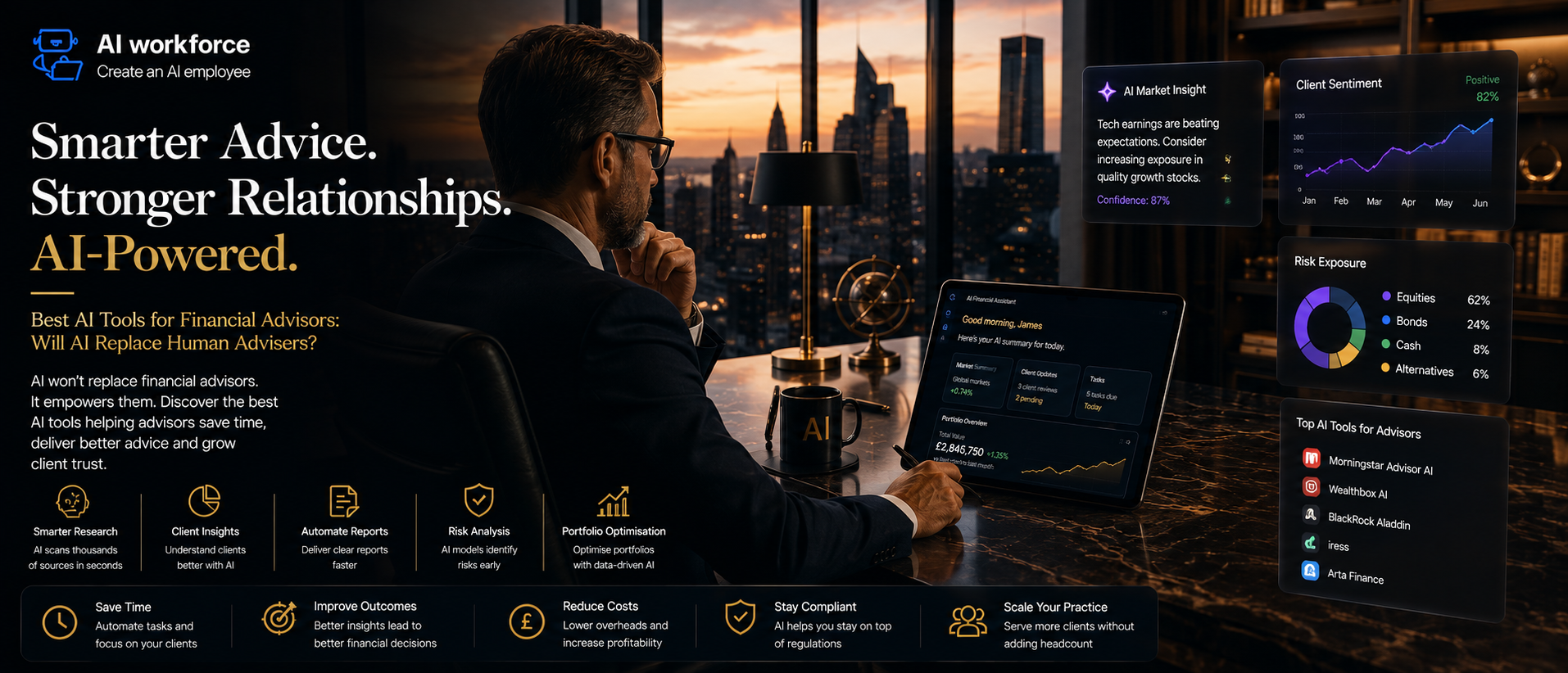
The way a financial adviser spends their day is changing fast, and generative AI in particular is reshaping everything from a client message to a full wealth management review. This guide covers what advisors can use right now, how to utilise AI without compromising the financial advice a client actually needs, and where the technology still needs a person's judgement.
How Does AI Help a Financial Adviser Day to Day?
This technology works by drafting a first version of something- a summary, a note, a report- that a person then reviews and refines rather than starting from a blank page. Large language models sit behind most of this, built on enormous amounts of text to produce a genuinely useful first draft in seconds.
AI systems built specifically for this profession increasingly understand financial terminology and regulatory language in a way a general-purpose ChatGPT session simply doesn't. Artificial intelligence used this way saves real time without removing a person from the decisions that actually matter.
Can AI Take Over From a Human Adviser?
The question of whether this can genuinely substitute for human expertise comes up in almost every conversation about the technology, and the honest answer is: not for the parts of the job that involve real judgement. Human financial advisers still handle the conversations that require empathy, context, and an understanding of a client's actual life circumstances.
That replace-the-adviser narrative misses a lot of nuance. AI enhances what a good adviser already does; it doesn't substitute for the relationship or the accountability that comes with giving genuinely personalised financial adviser guidance.
Why Consider AI for This Part of the Job?
The case for AI rests on a simple observation: a huge share of the job is repetitive, data-heavy work that a person shouldn't need to do manually anymore. The best tools built for this space handle research, drafting, and reporting far faster than a person working alone.
AI applications in this area increasingly cover portfolio analysis, scenario modelling, and client communication, freeing an adviser to spend more time on the strategic advice that actually justifies their fee.
How Are UK Firms Approaching AI?
UK financial services firms have moved from cautious experimentation to genuine adoption over the past two years. Every firm, regardless of size, is now expected to have some kind of plan for using this technology, not just the largest wealth managers.
AI adoption across the sector has accelerated sharply, and adoption of AI at this pace means firms that adopt AI properly now are building a real advantage over those still holding back to see how it plays out.
How Are Smaller UK Firms Approaching This?
UK financial advice firms are typically further ahead on the back-office side of the business than on anything client-facing, which makes sense given the compliance stakes involved. Advisory firms that get this balance right tend to automate the paperwork first and keep a person firmly in charge of the actual conversation.
Financial services industry data increasingly shows the same pattern across firms of every size: integrated AI that sits inside an adviser's existing systems gets used far more consistently than a separate tool that requires switching context.
How Do Advisers Use These Tools Day to Day?
Tools built specifically for this profession tend to focus on one specific job rather than trying to do everything at once. They help advisors most by handling the parts of the day that eat time without adding value: chasing a document, drafting a routine update, checking a detail from a previous conversation.
These work most effectively when treated as a strong first draft rather than a finished answer. Generic AI tools built for a general audience tend to underperform ones designed specifically for financial services, since the terminology and compliance requirements here are genuinely specialised.
How Does AI Help With Admin, CRM and Workflow?
Admin work has traditionally eaten a huge share of an adviser's week, and this is where the clearest early wins tend to show up. A crm updated automatically after a client meeting saves real time and reduces the chance of something getting missed.
Automation built around this kind of workflow cuts the gap between a conversation happening and the record of it being properly filed. Teams that automate this part of the job first tend to see the fastest, least controversial results, since nothing about the client relationship itself changes.
How Do Automated Tools Support the Team Day to Day?
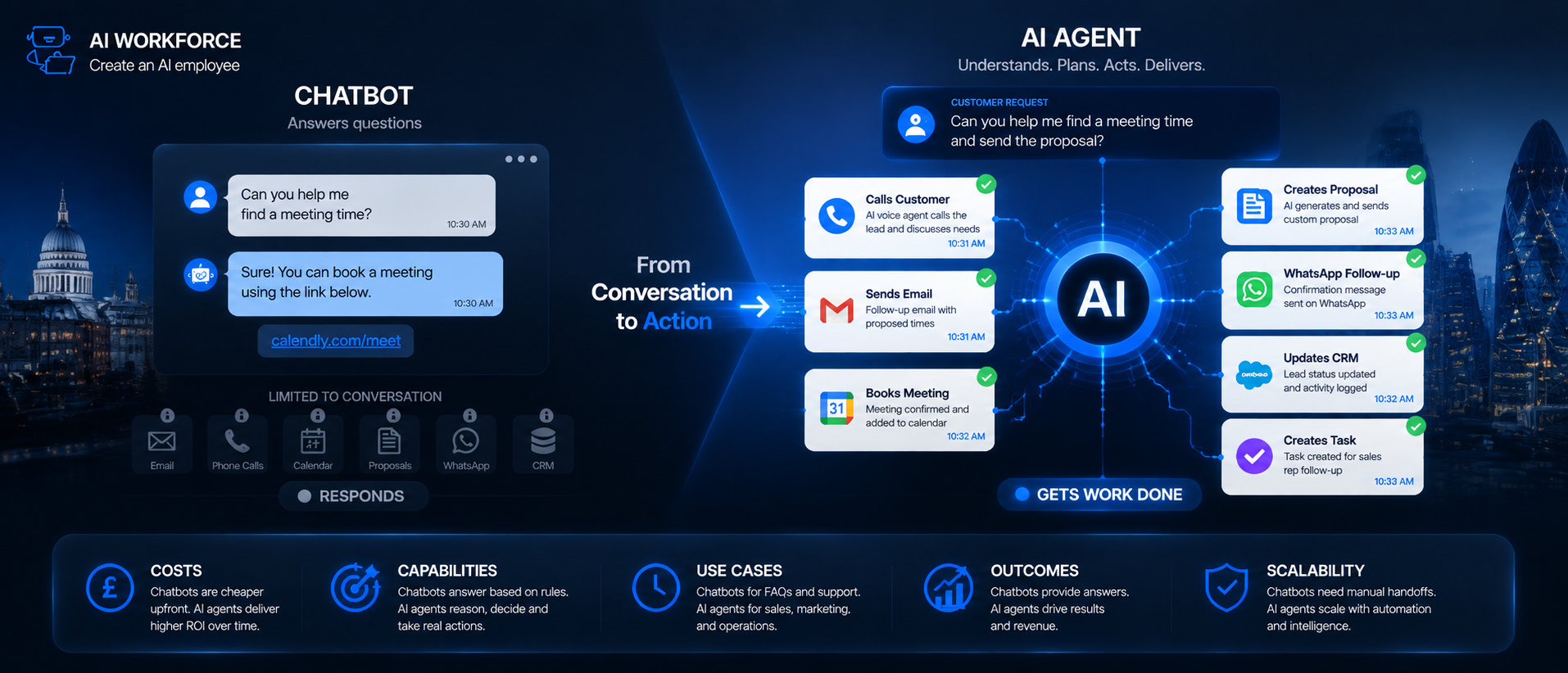
Chatbots handle a meaningful share of routine client questions without needing an adviser's direct involvement, freeing time for the conversations that genuinely need a person. AI agents increasingly coordinate between systems that used to require someone manually checking each one.
Client experience improves in ways that are easy to notice once routine questions get answered instantly rather than sitting in an inbox for a day. AI features built into an existing platform tend to get adopted faster than a separate AI platform subscription requiring its own login. Advisers who use AI this way rarely need much onboarding to get comfortable with it.
How Does AI Help After Every Conversation?
Client meeting notes captured automatically mean an adviser can focus entirely on the conversation rather than splitting attention between listening and writing. A structured record of the conversation is usually ready within minutes of the call ending.
Structured meeting summaries built around a consistent template make it far easier to compare one client conversation with a previous one. Action items get flagged automatically rather than relying on memory, and a clear summary at the end of the process means nothing important gets lost between the conversation and the follow-up.
How Do Advisers Draft Routine Messages for Clients?
AI to draft client emails works well for the routine updates that used to take a disproportionate amount of time relative to their importance. Providing financial advice that's genuinely personalised still requires a person's judgement, but the drafting and formatting around it no longer has to.
That kind of judgement stays a human responsibility firmly, and financial guidance built around a client's actual circumstances is exactly the part of the job this technology isn't trying to replace. Save time on the routine parts, and that time gets reinvested in exactly the conversations that matter most.
What Role Does AI Play in Compliance and Risk?
Compliance checking benefits enormously from a system that can flag a potential issue before a document goes out, rather than catching it in a review weeks later. Financial planning software increasingly builds this kind of check directly into the workflow.
Application of AI in this context works best when it's treated as a second check rather than the only one. AI software built for regulated environments increasingly logs its own reasoning, which matters enormously if a decision is ever questioned later. AI technology like this reduces risk rather than just reducing effort.
Can AI Handle Situations That Don't Fit a Template?
Complex financial situations still need a person's judgement, particularly where a client's circumstances don't fit a standard template. Individual advisers bring context a model simply doesn't have access to: a family situation, a change in risk appetite, a conversation that happened off the record.
Human oversight stays essential precisely because the stakes are high enough that a wrong recommendation has real consequences. Client relationships built on trust depend on a person being accountable for the advice given, and client data handled this way still needs the same care regardless of which tool helped produce the recommendation.
What Does MIT Sloan Research Say About This Technology?
This research has found that more than half of UK and US adults have already asked generative AI for financial advice, more than the share who consult a human adviser directly. AI in financial services at this scale is clearly no longer a fringe experiment.
The same research found that following AI-generated guidance actually moved people closer to sound saving and investing decisions in many cases, though the quality varied depending on how the question was asked. Gpt-4 and similar models have improved quickly, and gen AI today handles a noticeably wider range of financial questions well than it did even a year ago.
How Can AI Make Guidance More Accessible?
Financial advice AI has genuine potential to make advice more accessible to people who couldn't previously justify the cost of a traditional adviser relationship. Adding AI to a firm's existing service doesn't need to mean replacing the human relationship; it can mean extending guidance to more people at a lower cost.
AI-powered tools built this way, alongside AI-driven analytics and key points summarised clearly for a client, can transform how a firm serves clients who need simple guidance without needing the full weight of a traditional advisory relationship every time.
Key Takeaways
AI drafts a strong first version; a person still reviews and refines it
The clearest early wins come from back-office work, CRM updates, and meeting notes
Complex situations and real judgement still need a human adviser's oversight
UK adoption has accelerated sharply, but getting the basics right still matters most
Real-world research confirms people already turn to AI for this kind of guidance
Treating AI as a second check, not the only one, keeps risk properly managed
The goal is freeing up time for higher-value work, not replacing the relationship
Ready to Bring AI Into Your Advice Practice?
If your firm is still handling every routine task manually, it's worth seeing how much of that can run faster without losing the judgement that actually matters. Get in touch, and we'll help you find the right starting point.