Best AI Tools for Mortgage Brokers in the UK (2026)
Posted On: August 3, 2026
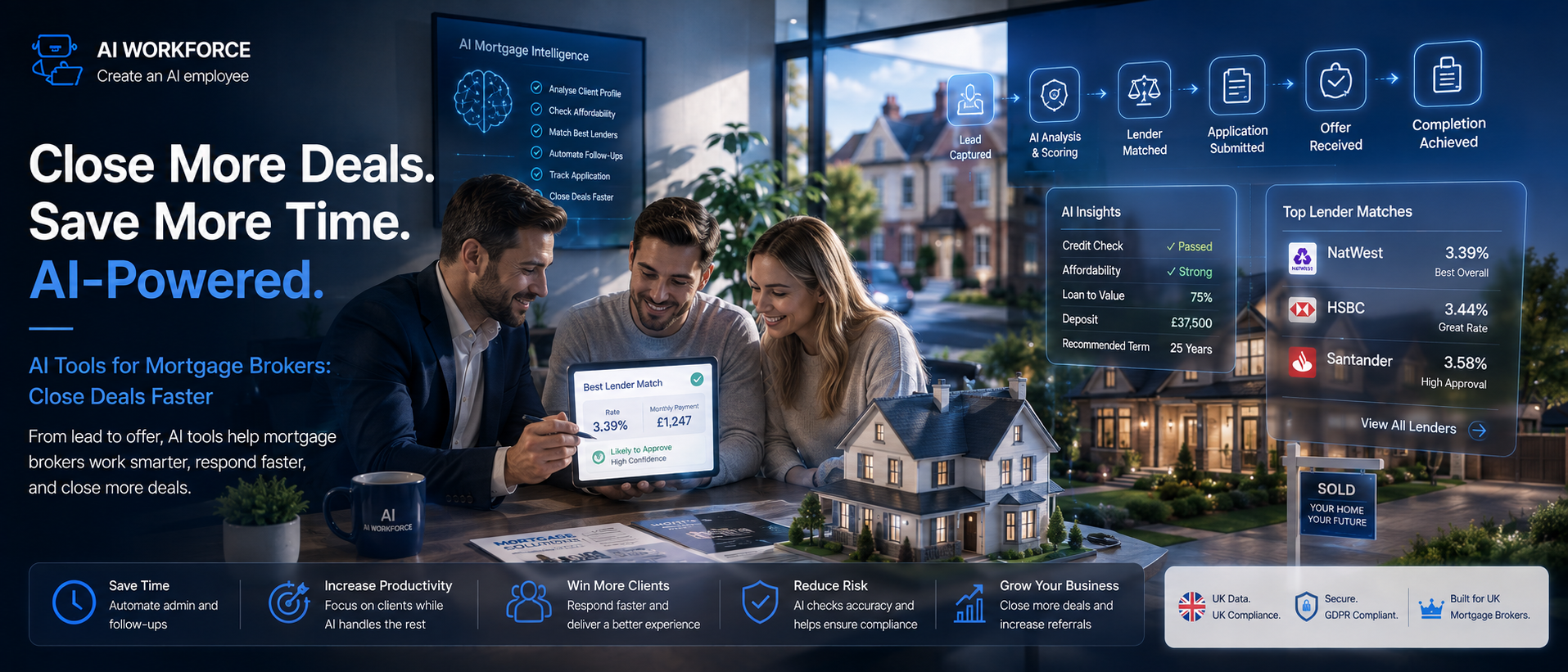
AI is transforming how a mortgage broker works day to day, and these tools are quickly becoming standard practice. This guide looks at how they're used through every stage of a mortgage application, from the first conversation with a lender to the final signed PDF, and why the right platform matters more than chasing the newest feature.
How Is AI Changing the Job of a Broker?
Adopting AI isn't about replacing a broker's judgement; it's about removing the parts of the job that eat time without adding value. A broker, sometimes called an adviser, spends a lot of the day handling dozens of small responsibilities, and a typical workflow now includes at least one point where a routine task happens automatically rather than manually.
This kind of change shows up first in the small things: a faster response, a quicker turnaround on a query, a bit more speed on the parts of the job that used to take all afternoon. Finding one small step to streamline often adds up more than people expect over a busy month, and the result is a real lift in efficiency, not just a marginal improvement.
How Does This Help With Accuracy and Record-Keeping?
Compliance is one of the areas where this genuinely earns its place, flagging a missing document or an inconsistent answer before it becomes a problem at a later stage. A client record kept inside a crm stays current automatically as new information comes in, rather than relying on someone remembering to type it up later.
This kind of consistency matters enormously when a file gets checked months later. A clean, complete record protects everyone involved.
How Does AI Help Each Day?
AI drafts emails from a short prompt, turning a rough idea into something ready to send in seconds rather than minutes. A broker's inbox fills up fast, and having a tool that can tailor a message to a specific client rather than sending something generic genuinely helps.
This is where these tools save time most reliably: not on the big strategic decisions, but on the dozens of small written tasks that used to eat away at a working day.
How Is the Wider Industry Changing?
The mortgage market overall is moving toward tools that can analyse a huge volume of data in the time it used to take a person to read through one file. AI-driven analysis increasingly flags an opportunity a person might have missed, and every transaction generates information that a system can learn from, spotting a pattern across hundreds of cases that a single broker would never see in isolation.
That kind of insight feeds directly into better decision-making, both for the person recommending a product and for the client deciding what to sign.
What Role Does This Play in Assessing a Case?
Affordability calculations used to mean laboriously cross-referencing a borrower's income and outgoings compared with a published criterion, one spreadsheet at a time. The system now handles much of this automatically, flagging an eligibility issue before a case ever gets submitted.
This doesn't remove the need for a person to sense-check the result, but it does mean far fewer surprises later in the process.
How Are Teams Using New AI Software?
ChatGPT has become a familiar starting point for many brokers, used for a quick first draft or a sense-check on an email before it goes out. Excel still handles plenty of the underlying calculation work behind the scenes, even as newer tools take over more of the front-end work.
Real-time data means a system can automate a routine update, a status check or a reminder, rather than tracking every case in a spreadsheet by hand.
How Does AI Help With Staying Visible Online?
LinkedIn has become one of the more effective channels for a broker to stay visible between deals, and these tools now help draft social media posts that would otherwise take up an entire afternoon. A short update posted consistently does more for visibility than one polished piece shared once a year.
This kind of presence helps stay top of mind with past clients who might not need a mortgage right now but will eventually refer someone who does. Being reachable anytime a question comes in, even briefly, reinforces that same reputation.
Can AI Support Specialist Finance Cases Differently?
Asset finance cases often involve a different set of paperwork and a different type of intermediary relationship than a simple residential purchase, and the tools that work well for one don't always transfer cleanly to the other. A specialist system built for one type of case tends to outperform a generic tool trying to do everything at once.
Recognising this difference early saves a lot of wasted setup time later, since the underlying data and paperwork genuinely differ between the two.
How Does AI Help With Staying Current on Regulation?
CPD requirements never really go away, and these tools increasingly help here too, summarising a long regulatory bulletin or lengthy guidance into something that can be read in a few minutes rather than an hour.
Keeping up this way, a little at a time, tends to work better than cramming everything in right before a renewal deadline.
What Matters Most Before Choosing a Tool?
Data privacy matters enormously when a tool is handling sensitive financial information, and not every solution on the market takes this as seriously as it should. Anyone choosing a new tool should ask directly how that information is stored, who can access it, and how long it's kept.
Getting this right protects both a firm's reputation and the relationship that took years to build.
Key Takeaways
AI handles admin and communication more quickly without replacing broker judgement
Getting the basics right and keeping consistent records matters just as much as moving fast
The right tool fits into how the job already works rather than replacing it entirely
Staying active online matters as much as handling the paperwork well
Handling sensitive information carefully deserves real scrutiny when choosing a new tool
Small, steady adoption beats trying to change everything at once
Ready to Bring AI Into Your Broking Practice?
If your practice is still doing everything the way it did five years ago, it's worth seeing how much more efficiently the work could run without losing the judgement that actually matters. Get in touch, and we'll help you find the right starting point.